
ChatGPT Ads expands: is your business ready for a pilot?

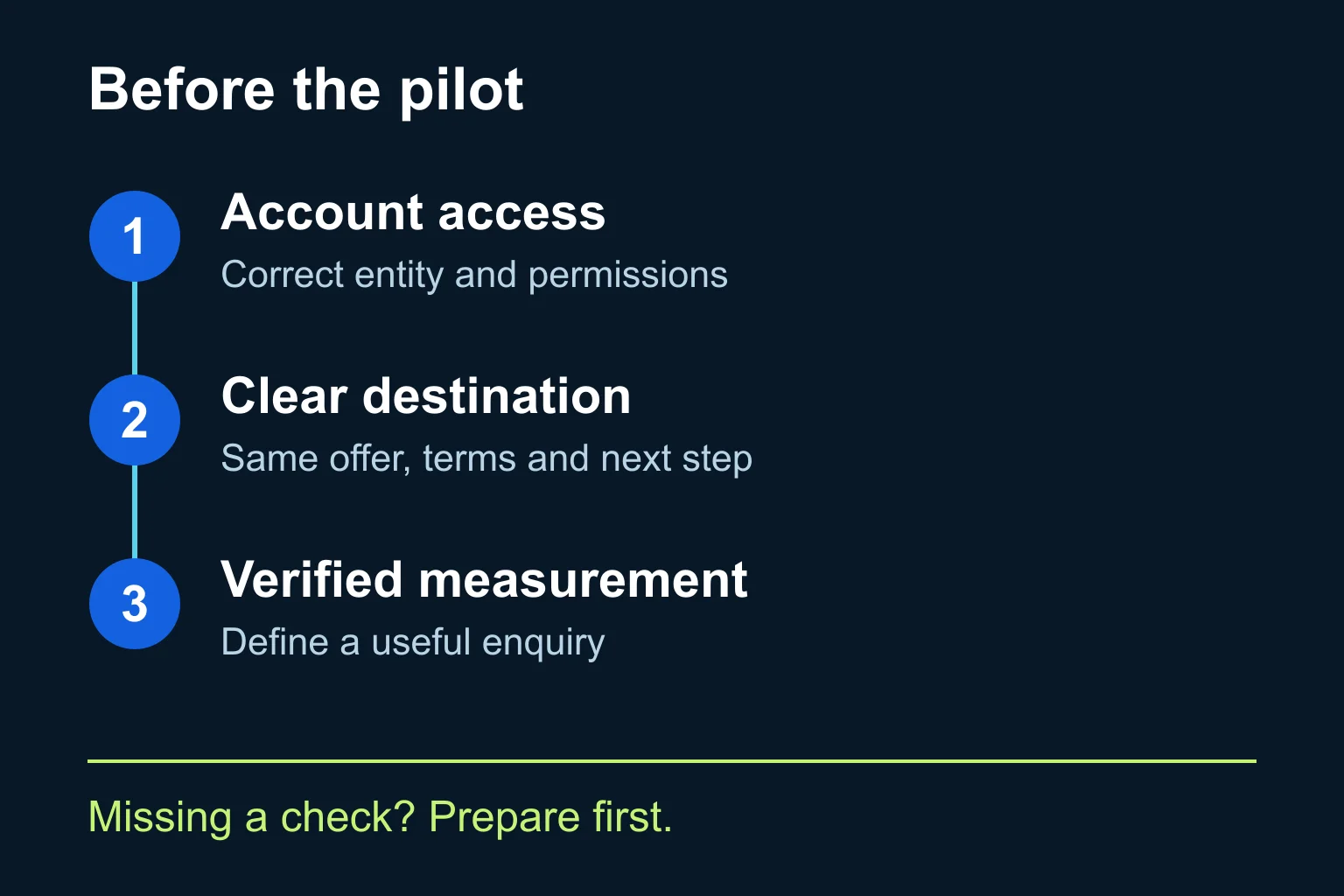
Before testing ChatGPT Ads, check account eligibility, the page visitors will reach and how you will recognise a useful enquiry. The latest expansion makes this a timely question, but wider availability does not tell you whether the channel will work for your business. Start with one offer and a test you can stop.
What changed on October 21?
OpenAI announced expansion to 26 additional countries on 21 October 2026, bringing its stated coverage to 89. The announcement describes the expansion as taking effect that day. This article was researched on 24 October, not on launch day. It is relevant to businesses considering a new acquisition channel, especially those serving several markets. Read the announcement.
ChatGPT Ads are paid placements, not purchased recommendations inside the model’s answer. OpenAI says the two are separate. Eligible Free and Go users may see ads; Plus, Pro, Business, Enterprise and Edu plans remain ad-free. Buying an ad is not a way to buy organic citations. OpenAI’s explanation.
Is self-service available for a Greek business?
The country table checked on 24 October lists Greece and Cyprus as available. The relevant location is the legal entity being advertised and billed, not simply the language of your website. Country eligibility does not certify that a particular advertiser has completed its reviews. Check the current list before planning a launch. Ads Manager availability.
Use the existing business account if there is one: ask its administrator for an invitation. The setup guide distinguishes Admin, Member and Viewer access. Give someone reviewing reports the least access their job needs. Verify country, currency and time zone before creation; the guide says these cannot subsequently be changed. Account setup.
Which of three routes fits your team?
1. Prepare the destination before buying traffic
Choose this when your offer is still difficult to understand. Open the landing page on a phone and ask a colleague to identify the intended customer, the included service, the main exclusion and the next step without explanation from you.
A fictional furniture retailer might advertise a compact desk for a home office. If assembly is excluded, the destination should say so before checkout. If the ad promises a particular delivery window, that same promise must survive on the product page. Fixing these inconsistencies is useful even if you never launch this channel. Our product-description guide explains how to keep claims tied to source facts.
2. Use Ads Manager for a small, owner-approved pilot
Choose this when the offer and measurement already work. A single campaign does not require custom software. Use the platform’s guided creation workflow, with a named owner checking the final creative, destination and budget.
There is an important launch trap: the quickstart warns against publishing the first campaign just to unlock scheduling options. Ads created during onboarding can serve after approval once other requirements are met. Treat submission as a potentially consequential launch step, not a harmless preview. Official quickstart.
3. Connect reporting only when the manual process is clear
Choose this when you already have several sources of enquiries and need to follow their outcomes. Start with a report export and a controlled spreadsheet: campaign, reporting period, spend, enquiries, qualified enquiries and eventual sales.
A connector can move records; a schedule determines when the transfer runs. Neither defines what counts as a qualified enquiry. Document that rule first. A custom integration is justified when repeated reconciliation or missing identifiers create a real operational problem, not merely because an API exists. This article does not claim an available Ads Manager MCP or instruct an AI agent to launch campaigns.
What should the first test prove?
Write a short test brief before spending:
- One question: can this offer produce relevant enquiries from the chosen market?
- One destination: record the exact page and confirm its mobile form or checkout works in a controlled test.
- One definition: specify what qualifies an enquiry, such as a supported location and a relevant product requirement.
- One owner and limit: approve the spend ceiling, review date and person responsible for pausing.
- One evidence trail: retain report dates and source identifiers without placing personal information in campaign URLs.
- One decision: continue, revise the offer or stop. Record the reason rather than treating every click as progress.
This is a proposed test design, not an Ergonya client result. For the fictional retailer, ten enquiries could include four outside the delivery area. Reporting ten useful leads would hide the problem; the appropriate next step could be clearer delivery information rather than more budget.
Keep platform-attributed conversions separate from your own confirmed sales. They answer different questions. A weekly report should show both, label their definitions and explain any mismatch. See our practical reporting workflow for an evidence-first approach.
When does Ergonya help?
If the destination is clear and the reports are manageable, use the ready-made advertising tool. You do not need a custom build to explore a new channel.
Ergonya is relevant when the website, enquiry handling or reporting cannot support the test: unclear pages, missing source information or manual handoffs that lose enquiries. Discuss the website and workflow with Ergonya and bring one landing-page URL, your definition of a useful enquiry and the handoff that currently breaks. We can identify the smallest useful implementation before proposing a wider project.