
What does ChatGPT Business Hub change for your business?

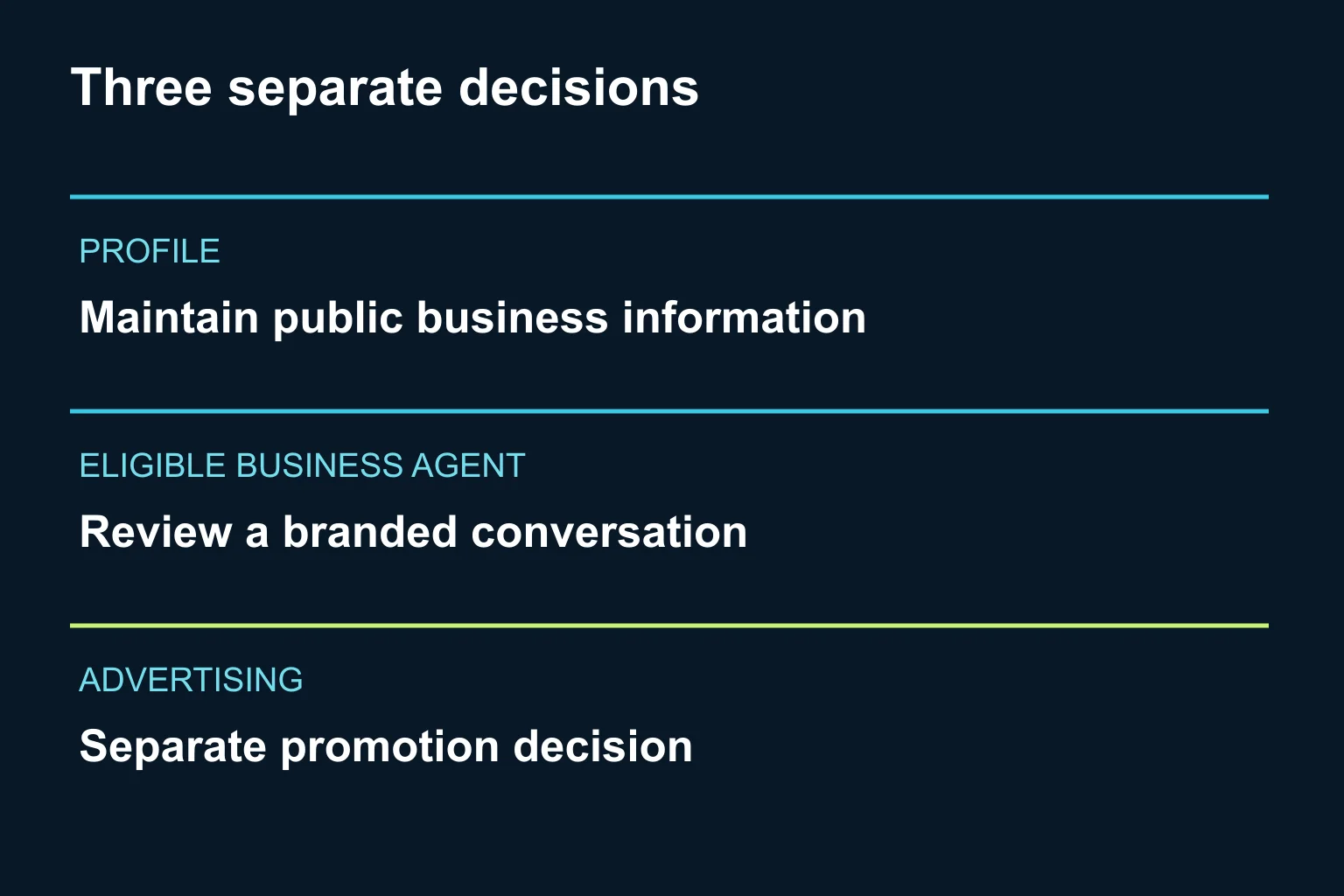
Start by checking whether your business can claim a profile and whether its public information is ready. Treat a Business Agent as a separate customer-facing release. There is no reason to begin with a custom integration or an advertising campaign just to organize the information customers need.
OpenAI announced the Businesses in ChatGPT beta on November 10, 2026. Business Hub brings profile management and aggregate engagement insights together; Business Agents add optional branded conversations, currently for eligible US ecommerce and online service businesses. These conversations are separate from ChatGPT’s independent answers. This guide checks the documentation on November 16; it is not a new announcement today. OpenAI announcement.
What is Business Hub, and is it available to my business?
Business Hub is the management area for a business’s information in ChatGPT. A Business Agent is the optional conversational experience representing that business. Neither term means the ChatGPT Business subscription used by a team internally.
Eligibility depends on location, industry and verification. Claiming a profile does not promise better placement or sales. Retailers can supply product feeds; Shopify is one supported route, not a universal requirement. Check the current Business Hub overview before planning a rollout.
For a Greek business, do not assume that access to profile management also grants access to an agent. Record the capability actually offered to your business, rather than borrowing a US launch example for your own roadmap.
What should I know before starting verification?
The setup guide separates claim approval from Persona identity verification. An Ads account or Enterprise agreement is not required to claim an eligible business. Approval of a new profile created through Persona publishes it automatically. The current agent cannot complete purchases, bookings or order checks; it directs customers to the website. Follow the methods offered in your account and have an authorized owner handle verification.
Prepare final public copy before that step. Keep identity documents out of your editorial folder and ordinary AI prompts. Assign a named person to review the profile, with another colleague checking business facts. This is a proposed working arrangement, not a claim that we have verified your account or completed a setup for you.
Which of three paths should I choose?
1. Profile preparation and maintenance. Choose this when your immediate problem is inconsistent public information. Create a compact source sheet: business name, canonical website, service coverage, current offer descriptions, policy links and an owner for each field. Compare it with the website before submitting anything. Keep a dated record of what was supplied.
2. A small agent pilot, if eligible. Choose one product category or a narrow set of customer questions. Review answers before publication and define when a visitor should use the website or contact the team. OpenAI’s Business Agents Policy requires truthful, current information, clear representation of the business and no invented prices, guarantees or results. It also restricts unnecessary sensitive-data requests. Build those limits into your review cases.
3. Improve the existing website while eligibility is unavailable. Clarify the same facts on product, delivery and contact pages. That work has value even without a new platform feature. If the real problem is maintaining hundreds of product records, investigate the existing feed process before commissioning another assistant. The AI transformation service can help select a bounded pilot.
What should the owner check this week?
Use this proposed action checklist; it does not require a reusable generation prompt.
- Name the business owner and reviewer. Record who may approve public information and who maintains it after launch. Use individual access and the permissions needed for the task.
- Resolve conflicting facts. Check opening hours, service area, product descriptions and policy links against the current website. Ask the responsible person to settle discrepancies.
- Check eligibility in the official flow. Note which features are actually available. Keep a pending review separate from an approved result.
- Prepare a small answer test set. Include an ordinary question, an exception, an unknown fact and a request requiring access to an individual order.
- Approve the public material. Review both the content and the destination of every link. Do not launch a draft merely to see what happens.
- Set a maintenance trigger. A changed delivery policy or product range should create a review task. Assign a date for the first follow-up.
A connector retrieves or transfers data; a scheduler starts recurring work. Neither automatically grants Business Hub eligibility, and MCP is not a scheduler. Any custom feed validation or review queue should have its own scope, limited permissions and human approval for publication. Do not assume an existing plugin or internal automation is connected to the Business Agent.
What does a useful pilot look like?
Imagine a fictional homeware retailer. Its pilot covers product dimensions and the published delivery policy. The reviewer asks about a measurement that exists, an unsupported delivery destination, and the status of a particular order. For each answer, record the approved source, what the reply should contain, and where it should hand the customer back to the website. A plausible invented delivery promise is a failed check.
This example is a proposed test, not a measured customer result. Start with a manageable question set and record corrections. Expand only when the owner can keep the information current.
Aggregate insights can help identify themes, but businesses do not receive individual consumer conversations or agent chats. Reporting thresholds apply. OpenAI’s explanation of insights. Compare whatever you can observe with website enquiries and your own review notes; do not turn a mention count into a sales attribution claim.
When does Ergonya help?
A single profile with stable information may only need an owner and a review checklist. If product data, policy revisions and website answers disagree repeatedly, contact Ergonya for a focused assessment of the information flow. Start with one source of truth and one publishing handoff, then decide whether feed checks or custom automation would solve a demonstrated problem.